Custom 3D Printing Services for Tailored Solutions
Custom 3D printing has transformed the way individuals and businesses approach manufacturing and prototyping. It offers precision, flexibility, and speed that traditional methods cannot match. I explore how customized 3D printing solutions deliver tailored results that meet specific needs efficiently and effectively.
Understanding Customized 3D Printing Solutions
Customized 3D printing solutions refer to the process of creating three-dimensional objects from digital models with exact specifications. This technology allows for the production of complex geometries and intricate details that are difficult or impossible to achieve with conventional manufacturing.
The process begins with a digital design, often created using CAD software. The design is then sliced into layers, which the 3D printer builds sequentially. Materials vary from plastics and resins to metals and composites, depending on the application.
Key benefits include:
Precision: Achieve tight tolerances and fine details.
Speed: Rapid prototyping accelerates product development.
Cost-effectiveness: Reduce waste and tooling expenses.
Flexibility: Easily modify designs without retooling.
These advantages make customized 3D printing solutions ideal for industries such as aerospace, healthcare, automotive, and consumer products.

Applications of Customized 3D Printing Solutions
The versatility of customized 3D printing solutions enables a wide range of applications. Here are some practical examples:
Prototyping
Rapidly produce prototypes to test form, fit, and function. This reduces development cycles and improves design accuracy.
End-Use Parts
Manufacture small batches or custom parts that require high precision. This is common in medical implants, aerospace components, and automotive parts.
Tooling and Fixtures
Create custom jigs, fixtures, and molds that enhance manufacturing efficiency and quality control.
Personalized Products
Produce customized consumer goods such as eyewear, jewelry, and footwear tailored to individual preferences.
Educational Models
Develop detailed anatomical or architectural models for training and demonstration purposes.
Each application benefits from the ability to tailor the design and material properties to specific requirements.

Choosing the Right Materials and Technologies
Selecting appropriate materials and printing technologies is critical for achieving desired outcomes. Common 3D printing technologies include:
Fused Deposition Modeling (FDM): Uses thermoplastic filaments. Suitable for functional prototypes and low-cost parts.
Stereolithography (SLA): Employs photopolymer resins cured by laser. Ideal for high-detail and smooth surface finishes.
Selective Laser Sintering (SLS): Uses powdered materials fused by laser. Produces strong, complex parts without support structures.
Direct Metal Laser Sintering (DMLS): Prints metal parts with high strength and precision.
Material options range from PLA, ABS, and nylon to titanium, stainless steel, and ceramic composites. The choice depends on factors such as mechanical properties, thermal resistance, biocompatibility, and cost.
I recommend consulting with a 3D printing service provider to match materials and technologies to your project goals.
Leveraging Custom 3D Printing Services for Efficiency
Partnering with professional custom 3d printing services streamlines the production process. These services offer expertise in design optimization, material selection, and post-processing techniques.
Benefits of using specialized services include:
Design Assistance: Improve printability and performance through expert advice.
Quality Control: Ensure dimensional accuracy and material integrity.
Scalability: Handle projects from single prototypes to small production runs.
Turnaround Time: Access fast, on-demand printing to meet tight deadlines.
For example, a startup developing a new medical device can quickly iterate designs and produce functional prototypes without investing in expensive equipment. Similarly, a manufacturer can reduce lead times for custom tooling.
Future Trends in Customized 3D Printing Solutions
The field of customized 3D printing solutions continues to evolve rapidly. Emerging trends include:
Multi-material Printing: Combining different materials in a single print for enhanced functionality.
Bioprinting: Printing living tissues for medical research and regenerative medicine.
Automation and AI: Integrating artificial intelligence to optimize print parameters and workflows.
Sustainability: Using recyclable and biodegradable materials to reduce environmental impact.
Staying informed about these developments helps leverage the full potential of 3D printing technology.
Maximizing the Value of Customized 3D Printing Solutions
To fully benefit from customized 3D printing solutions, consider the following recommendations:
Define Clear Objectives: Understand the purpose of the print, whether prototyping, production, or tooling.
Invest in Quality Designs: Use precise and optimized CAD models to avoid print failures.
Select Suitable Materials: Match material properties to functional requirements.
Collaborate with Experts: Work with experienced service providers for guidance and quality assurance.
Plan for Post-Processing: Account for finishing steps such as sanding, painting, or assembly.
By following these steps, you can ensure that your projects achieve the desired quality, functionality, and cost-effectiveness.
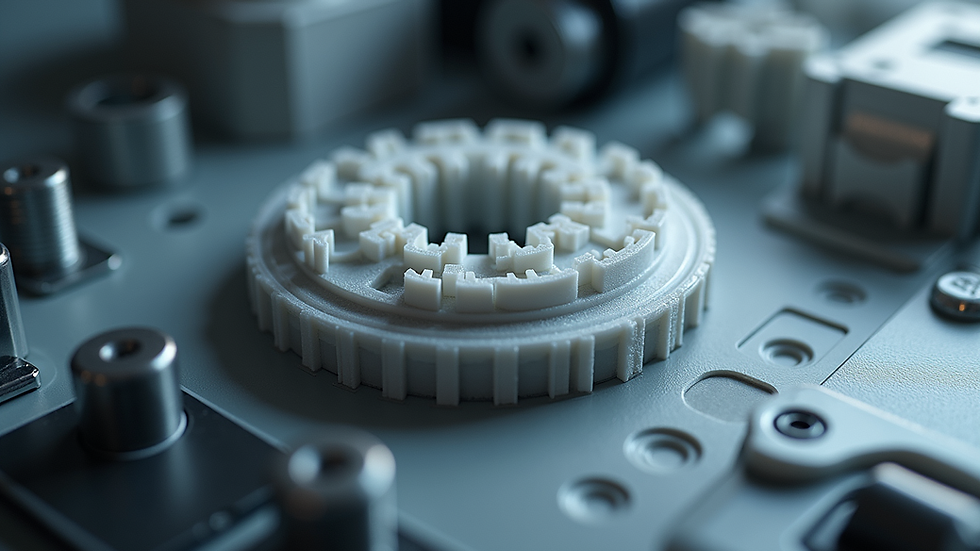
Customized 3D printing solutions offer unmatched flexibility and precision. They empower the creation of complex, tailored products that meet exact specifications. Leveraging professional services accelerates development and enhances quality. As technology advances, the scope and impact of 3D printing will continue to expand, making it an essential tool for modern manufacturing and design.


Comments