Exploring Custom 3D Printing Options for Your Needs
The rise of 3D printing technology has transformed how individuals and businesses approach manufacturing and prototyping. Custom 3D printing options provide a flexible, efficient way to create precise, complex designs without the constraints of traditional methods. This post explores the key aspects of custom 3D printing, helping you understand how to leverage these services for your specific requirements.
Understanding Custom 3D Printing Options
Custom 3D printing options vary widely depending on the technology, materials, and finishing processes used. Selecting the right option depends on the intended application, budget, and desired quality.
Fused Deposition Modeling (FDM): This is the most common and cost-effective method. It uses thermoplastic filaments melted and extruded layer by layer. FDM suits functional prototypes and simple parts.
Stereolithography (SLA): SLA uses a laser to cure liquid resin into solid layers. It produces high-resolution, smooth parts ideal for detailed models and jewelry.
Selective Laser Sintering (SLS): SLS fuses powdered materials with a laser. It creates durable, complex geometries without support structures, suitable for functional parts.
Multi Jet Fusion (MJF): MJF applies binding agents to powder layers, offering fast production and strong mechanical properties.
Direct Metal Laser Sintering (DMLS): This method prints metal parts with high precision, used in aerospace, automotive, and medical industries.
Each option has trade-offs in speed, cost, material properties, and surface finish. Understanding these helps in choosing the best fit for your project.

Key Factors When Choosing Custom 3D Printing Options
When selecting custom 3D printing options, consider the following factors carefully:
Material Requirements: Identify the mechanical, thermal, and aesthetic properties needed. Plastics like ABS and PLA are common, but metals, resins, and composites expand possibilities.
Precision and Detail: High-resolution methods like SLA or DMLS are necessary for intricate designs. For larger, less detailed parts, FDM or SLS may suffice.
Production Volume: For one-off prototypes, 3D printing is ideal. For larger runs, evaluate cost-effectiveness compared to traditional manufacturing.
Lead Time: Some technologies offer faster turnaround. If time is critical, prioritize options with shorter production cycles.
Post-Processing Needs: Consider finishing steps such as sanding, painting, or heat treatment. Some materials and methods require more extensive post-processing.
By assessing these factors, you can narrow down the custom 3D printing options that align with your project goals.
Applications of Custom 3D Printing Options
Custom 3D printing options serve a broad range of applications across industries:
Prototyping: Rapidly create functional or visual prototypes to test form, fit, and function.
Manufacturing Aids: Produce jigs, fixtures, and tooling components to streamline production.
End-Use Parts: Manufacture low-volume or customized parts with complex geometries.
Medical Devices: Fabricate patient-specific implants, prosthetics, and surgical guides.
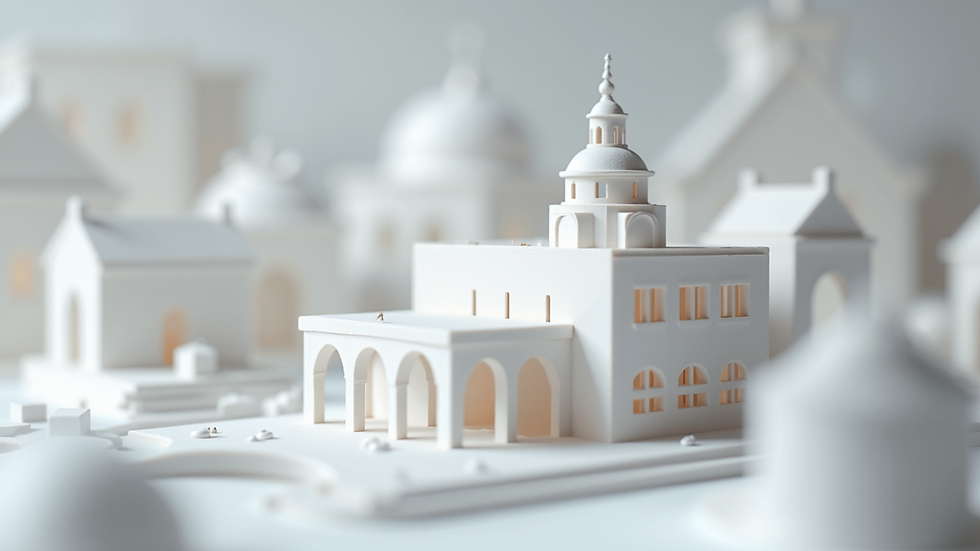
Architectural Models: Build detailed scale models for presentations and planning.
Consumer Products: Design personalized items such as jewelry, phone cases, and home decor.
Each application benefits from selecting the appropriate printing technology and material to meet performance and aesthetic requirements.
How to Work Effectively with Custom 3D Printing Services
Partnering with a reliable provider of custom 3d printing services ensures your designs translate accurately into physical parts. Here are practical steps to optimize this collaboration:
Prepare Accurate 3D Models: Use CAD software to create precise, watertight models. Check for errors such as non-manifold edges or intersecting geometry.
Specify Material and Finish: Communicate your material preferences and surface finish requirements clearly.
Request Prototypes: Start with a prototype to validate design and fit before full production.
Understand Design Constraints: Learn about the printer’s build volume, minimum feature size, and support structure needs.
Plan for Post-Processing: Discuss finishing options and timelines upfront.
Review Samples: Evaluate initial samples for quality and dimensional accuracy.
Iterate as Needed: Use feedback to refine designs and improve final output.
Following these guidelines helps reduce errors, control costs, and achieve the desired quality in your 3D printed parts.
Future Trends in Custom 3D Printing Options
The field of custom 3D printing continues to evolve rapidly. Emerging trends include:
Multi-Material Printing: Combining different materials in a single print to enhance functionality.
Bioprinting: Printing living tissues for medical research and regenerative medicine.
Sustainable Materials: Development of biodegradable and recycled materials to reduce environmental impact.
Automation and AI: Integrating artificial intelligence to optimize print parameters and quality control.
Large-Scale Printing: Expanding build volumes for construction and automotive parts.
Staying informed about these trends allows you to leverage the latest advancements and maintain a competitive edge.
Maximizing the Value of Custom 3D Printing Options
To fully benefit from custom 3D printing options, consider these actionable recommendations:
Invest in Design for Additive Manufacturing (DfAM): Tailor your designs to exploit 3D printing strengths such as complex internal structures and lightweight lattices.
Use Simulation Tools: Predict print outcomes and identify potential issues before production.
Combine Technologies: Use 3D printing alongside traditional manufacturing for hybrid solutions.
Educate Your Team: Build internal knowledge on 3D printing capabilities and limitations.
Monitor Costs: Track material, machine time, and post-processing expenses to optimize budgets.
By adopting these practices, you can accelerate product development and improve overall project success.
Custom 3D printing options offer unparalleled flexibility and precision for a wide range of needs. Whether creating prototypes, functional parts, or unique products, understanding the available technologies and how to work with service providers is essential. Leveraging custom 3d printing services effectively enables rapid, high-quality production that meets exact specifications. Embracing these capabilities positions you to innovate and respond quickly in a competitive market.


Comments